Petra Roth · 4 November 2026
The Interplay Between Temporal Sequencing and Retrieval Precision in Nested Archive Frameworks Shapes How Professionals Navigate Complex Information Systems
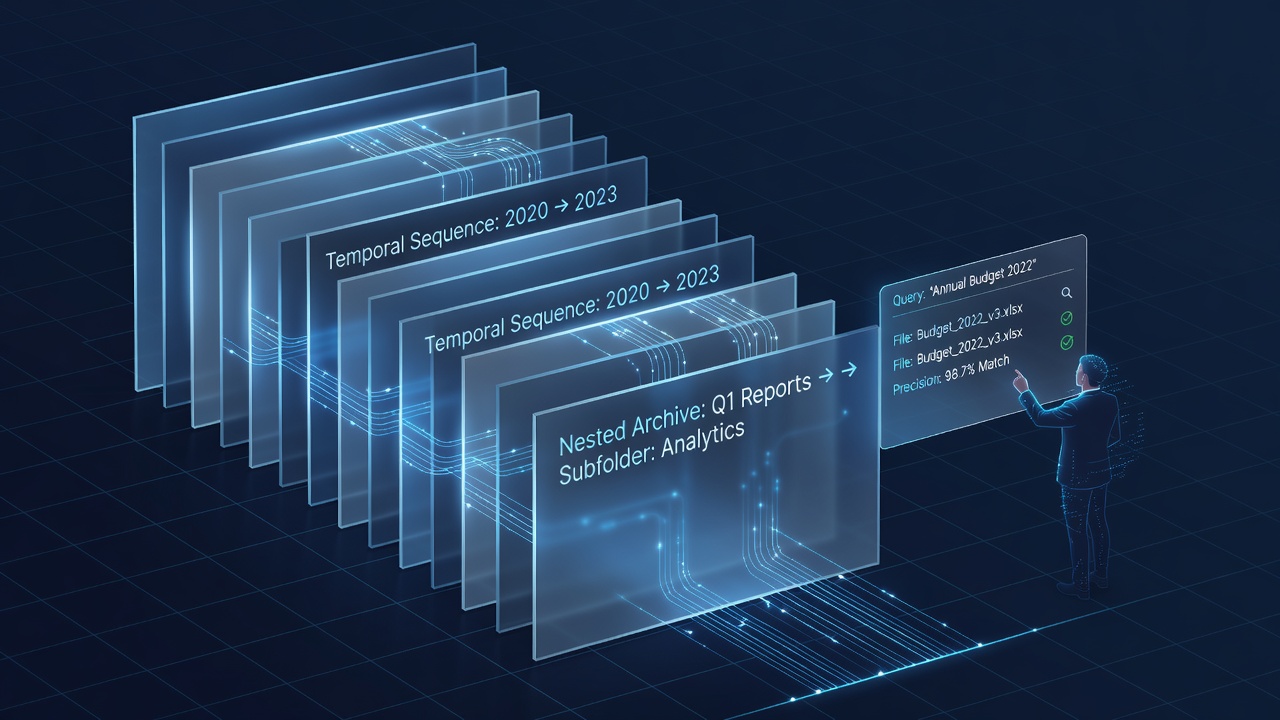
Professionals working with complex information systems encounter nested archive frameworks where temporal sequencing determines the chronological arrangement of records while retrieval precision governs the accuracy of locating specific entries across multiple layers. These elements interact directly because ordered timelines provide context that refines search algorithms and reduces mismatches in hierarchical data sets. Research indicates that systems incorporating both factors show measurable improvements in navigation speed when archives expand beyond single-level structures.
Defining Temporal Sequencing Within Hierarchical Archives
Temporal sequencing assigns time-based markers to each data point so that records maintain their original order even after migration into nested layers, and this process supports event reconstruction in fields such as regulatory compliance and scientific research. Systems that apply consistent sequencing protocols allow users to trace changes across versions without manual intervention, whereas inconsistent markers create gaps that complicate later queries. Data from multiple institutional implementations show that standardized time stamps reduce retrieval errors by aligning related documents automatically during layered searches.
Retrieval Precision Mechanisms in Layered Structures
Retrieval precision measures how closely returned results match the original query parameters, particularly when archives contain sub-collections that inherit metadata from parent layers. Algorithms adjust ranking scores by cross-referencing temporal markers with keyword matches, which narrows results before users reach deeper archive levels. Studies conducted across government repositories demonstrate that precision rates climb when temporal filters activate early in the search sequence rather than after initial broad matches appear.
How the Two Elements Interact in Practice
Professionals notice the interaction most clearly when navigating large repositories because temporal sequencing supplies the backbone that retrieval algorithms use to filter noise from nested collections. One study revealed that organizations applying both techniques simultaneously recorded fewer redundant accesses to outdated records, since time-ordered layers automatically surface current versions first. This combination proves especially useful in environments where regulatory updates arrive frequently and older documents must remain accessible without overwhelming active queries.
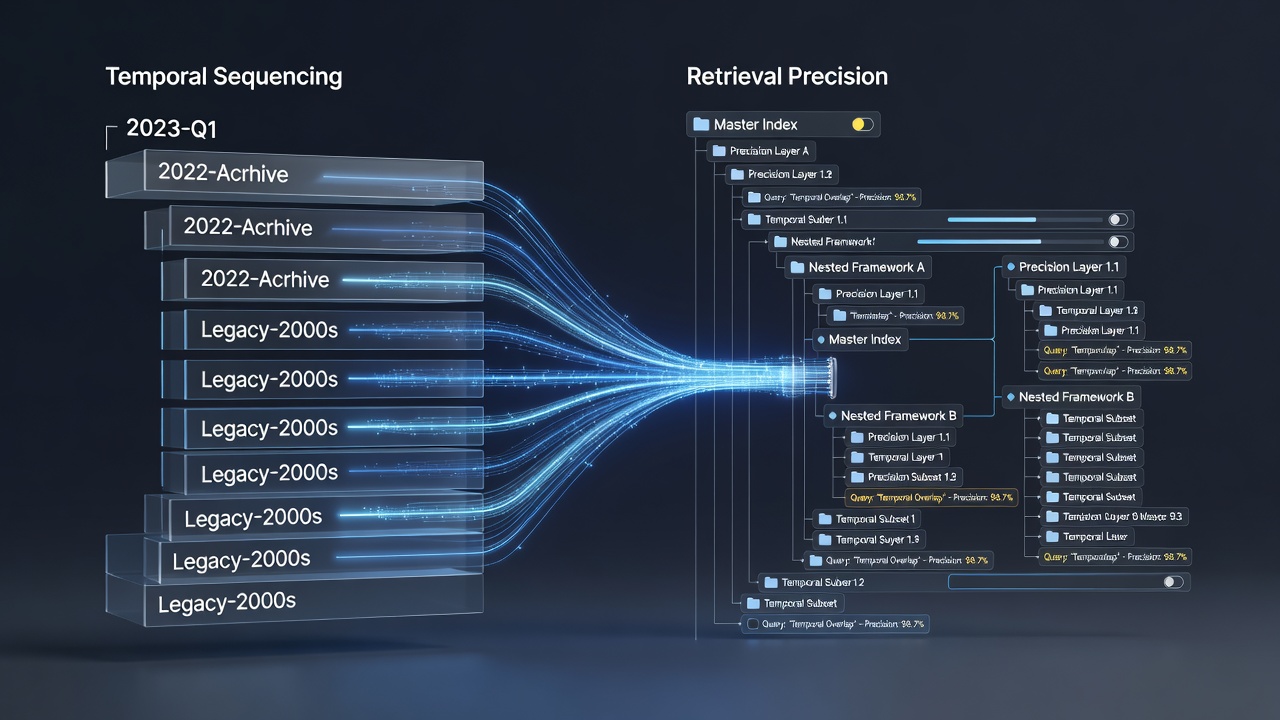
Case examples from research institutions illustrate the pattern: when a legal archive added temporal sequencing to its nested folders, retrieval precision increased because search tools could exclude superseded documents based on date hierarchies before applying content filters. Observers note similar gains in medical record systems where patient histories span multiple decades and sub-layers contain test results ordered by examination dates.
Current Developments Expected by November 2026
Updates to digital preservation standards scheduled for release around November 2026 focus on integrating temporal sequencing protocols with precision scoring at the framework level, according to planning documents from several national archives programs. These changes aim to standardize how nested collections handle time-based metadata so that retrieval tools across different platforms produce consistent outputs. Figures from pilot projects already indicate that early adoption of combined sequencing and precision rules cuts average navigation time by measurable margins in multi-tier environments.
Impact on Professional Navigation Patterns
Navigation patterns shift when professionals gain access to archives that balance temporal order with precise retrieval because users spend less time manually sorting results and more time analyzing content. Reports from the U.S. National Archives describe how layered systems with strong sequencing reduce the number of steps required to locate time-sensitive records. Meanwhile, findings shared by the National Library of Australia highlight parallel improvements in precision when date hierarchies guide initial filtering before semantic matching occurs.
Training programs now incorporate these interactions so that staff learn to leverage time-based filters first, then refine with precision tools, rather than treating the two as separate functions. This approach aligns with observed workflows in sectors that manage high volumes of layered documentation daily.
Conclusion
The documented relationship between temporal sequencing and retrieval precision continues to influence how nested archive frameworks support professional tasks in complex information systems. Institutions that maintain both elements report smoother access across expanding collections, and ongoing standard revisions planned through 2026 seek to formalize these practices further. Data gathered from operational repositories confirms that coordinated implementation of time ordering and result accuracy yields measurable gains in navigation efficiency without requiring entirely new infrastructure.