Zara Bauer · 7 October 2026
Shifts in Multi-Tier Archive Hierarchies and Their Effects on Long-Term Data Accessibility Across Professional Hubs
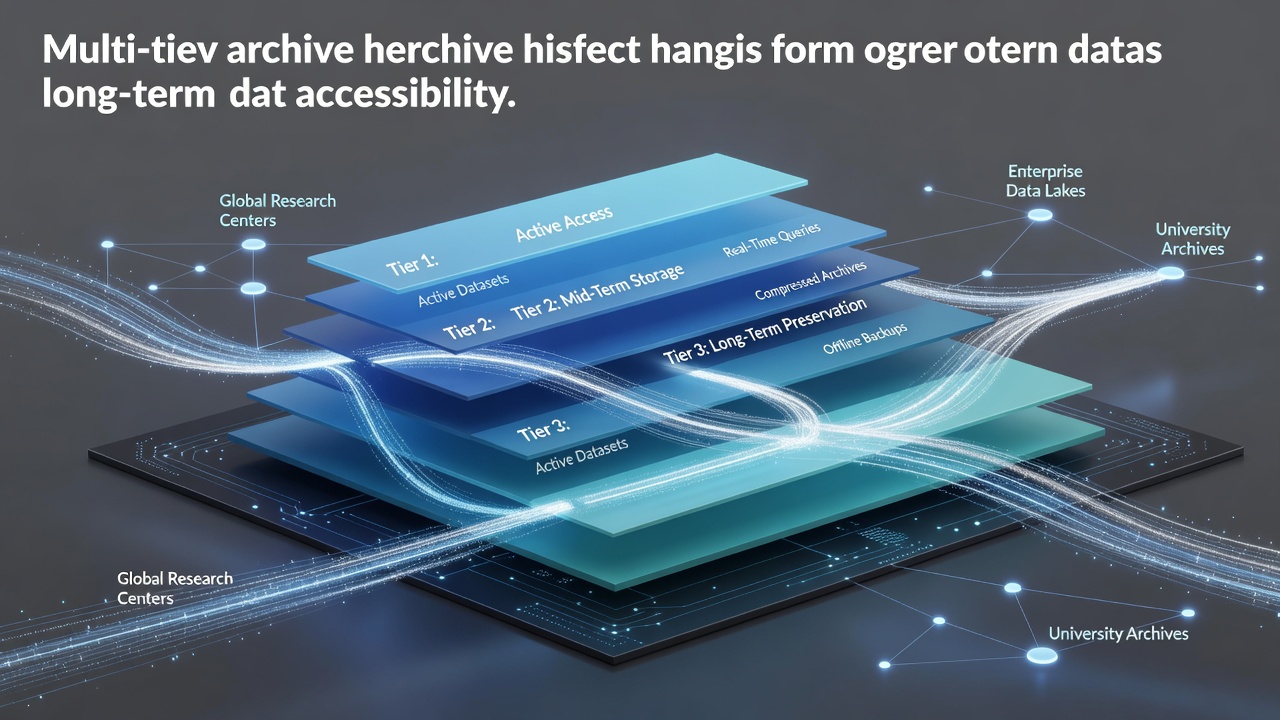
Multi-tier archive hierarchies continue to evolve as organizations manage growing data volumes and integrate new storage technologies, and these adjustments influence how professionals retrieve records across research institutions, corporate offices, and government facilities over extended timeframes. Data centers now routinely combine solid-state drives for active files, hard disk arrays for moderate access needs, and tape or cloud-based cold storage for long-term retention, while transitions between these layers often introduce variable retrieval speeds that affect daily workflows.
Observers note that many professional hubs have shifted away from rigid on-premises tier structures toward hybrid models incorporating public cloud services, and this movement gained momentum as regulatory frameworks emphasized data portability and security standards. By October 2026, reports indicate that several large-scale implementations had completed migrations to software-defined storage systems capable of automated tiering based on access patterns, which reduced manual intervention yet required updated protocols for ensuring consistent availability of archived materials.
Development of Tiered Storage Approaches
Traditional hierarchies relied on distinct physical media with clear performance boundaries, but researchers have documented a move toward fluid boundaries where intelligent software monitors usage and relocates files dynamically. Professionals in academic and corporate environments frequently encounter situations where infrequently accessed datasets migrate to slower tiers without explicit notification, and this automation streamlines operations while creating occasional bottlenecks during urgent retrieval requests.
Studies from institutions tracking enterprise storage trends show that adoption rates for automated tiering tools increased steadily through the mid-2020s, driven by cost pressures and the need to balance performance with capacity expansion. Organizations that implemented these systems reported measurable changes in how staff interacted with historical records, particularly when projects spanned multiple years and required cross-referencing older datasets stored in colder layers.
Consequences for Extended Data Retrieval
Long-term accessibility depends on the ability to locate and restore files without excessive delays or format obsolescence, and shifts in hierarchy design have produced mixed outcomes across different professional settings. In sectors handling regulatory records, such as healthcare and legal services, extended retrieval times from cold storage can interrupt compliance audits when systems fail to prioritize critical archives during peak demand periods.
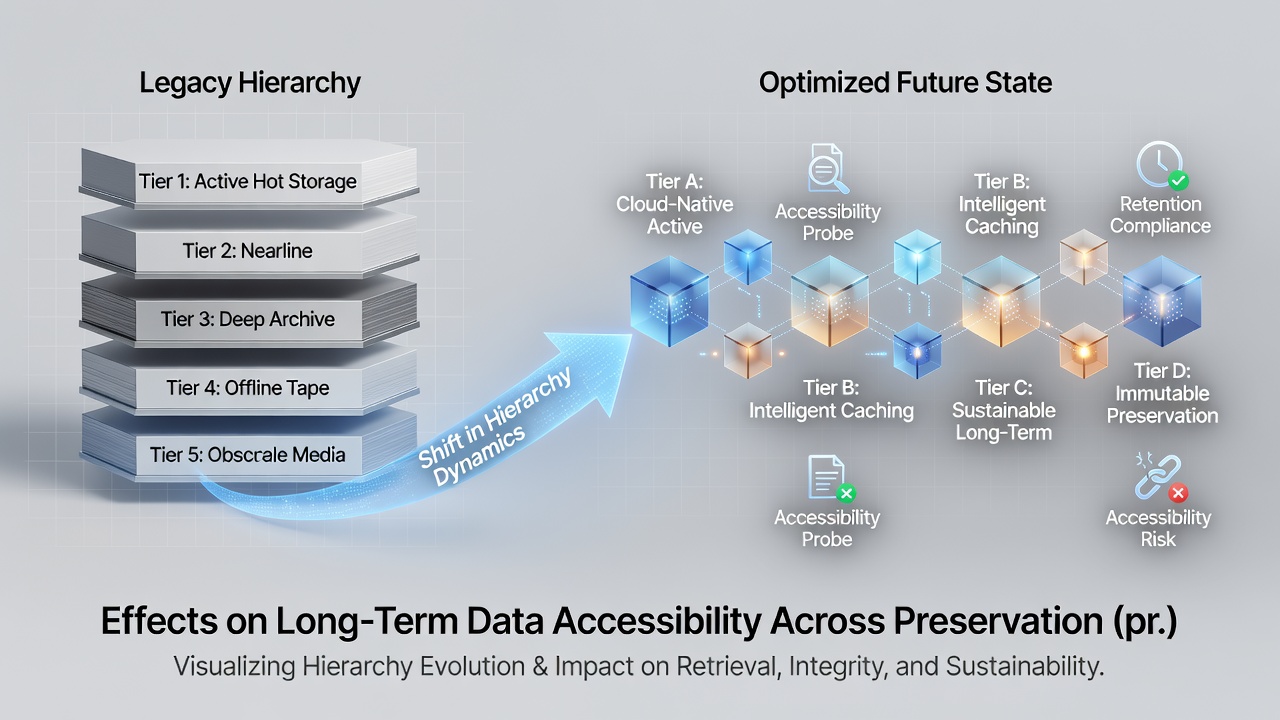
Evidence from monitoring programs reveals that hybrid cloud integrations sometimes improve redundancy through geographic distribution, yet they introduce dependencies on network conditions and provider uptime that were less prominent in purely local setups. Those managing large repositories have observed that metadata tagging becomes essential for maintaining search efficiency, since files scattered across multiple tiers lose visibility if indexing practices lag behind migration schedules.
According to guidelines published by the National Institute of Standards and Technology, organizations benefit from establishing clear retention policies that align tier placement with expected access frequency, and these recommendations have guided updates in several North American facilities. Meanwhile, the European Commission has highlighted similar considerations in its data governance initiatives, emphasizing interoperability across borders to prevent accessibility gaps when records move between different storage environments.
Adaptations Observed in Professional Environments
Teams responsible for data stewardship have responded by refining monitoring dashboards that track tier migration logs and flag potential retrieval risks before they affect operations. Case examples from research consortia demonstrate that proactive testing of restore procedures across all hierarchy levels helps maintain continuity, especially when older file formats require specialized emulation tools that may not reside in active storage.
What's interesting is how these adaptations intersect with broader infrastructure changes, such as the rollout of higher-bandwidth connections that partially offset latency introduced by distant cold storage locations. Data shows that facilities investing in such connectivity upgrades experienced fewer disruptions during large-scale archive reviews, although initial setup costs influenced adoption timelines differently across regions.
Conclusion
Overall patterns indicate that ongoing refinements to multi-tier archive hierarchies will continue shaping accessibility outcomes in professional hubs, and sustained attention to metadata management, policy alignment, and infrastructure testing remains central to preserving reliable long-term access. As systems incorporate further automation and distributed resources, the emphasis stays on ensuring that historical datasets remain reachable without undue friction for the professionals who depend on them.